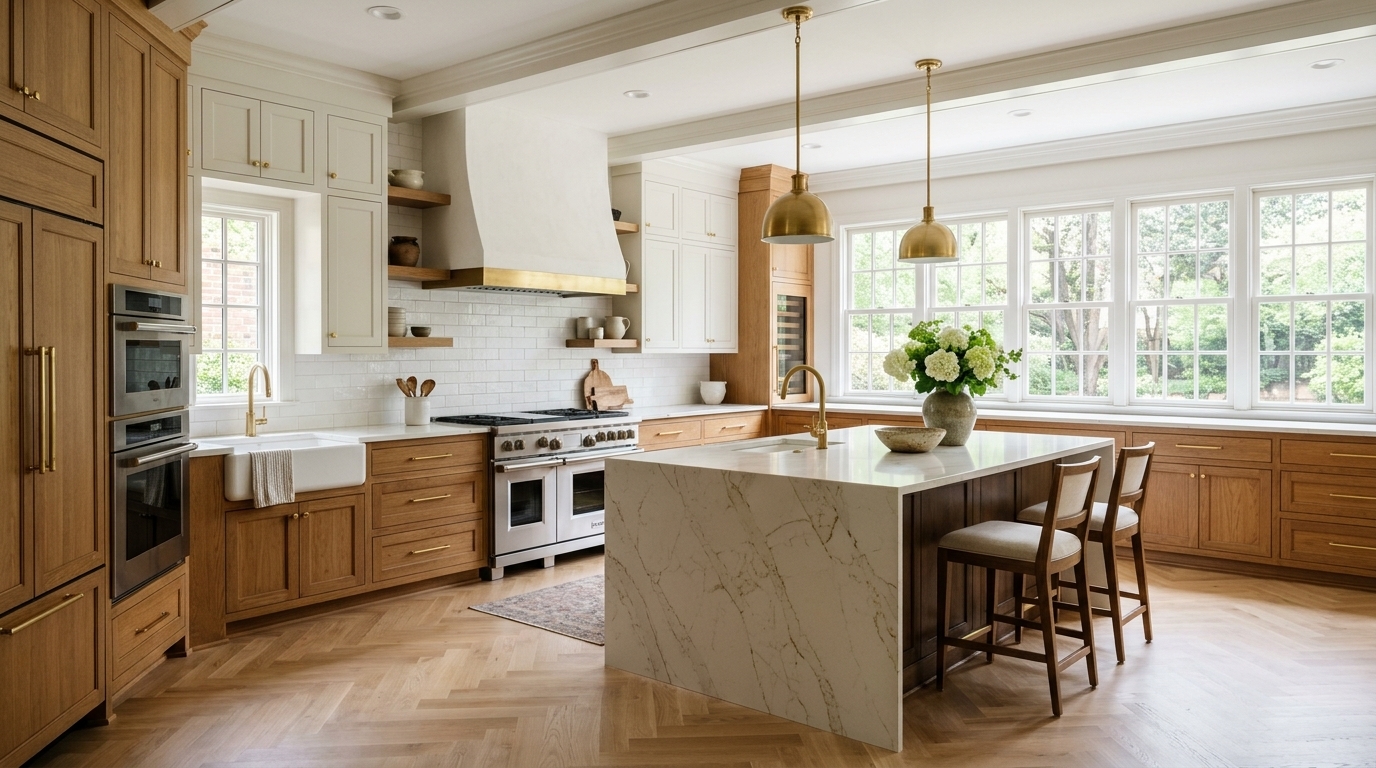
Memphis Kitchen Remodeling & Custom Cabinetry Experts
Transforming kitchens in Memphis, Germantown, and Collierville with custom islands, premium quartz, and open layouts.
Full-scale remodels from $32,000 – $52,000 · Specialists in Traditional Southern Brick Colonials & Mid-Century Ranch Layouts
Free Design Consultation
Memphis Kitchen Remodeling Services
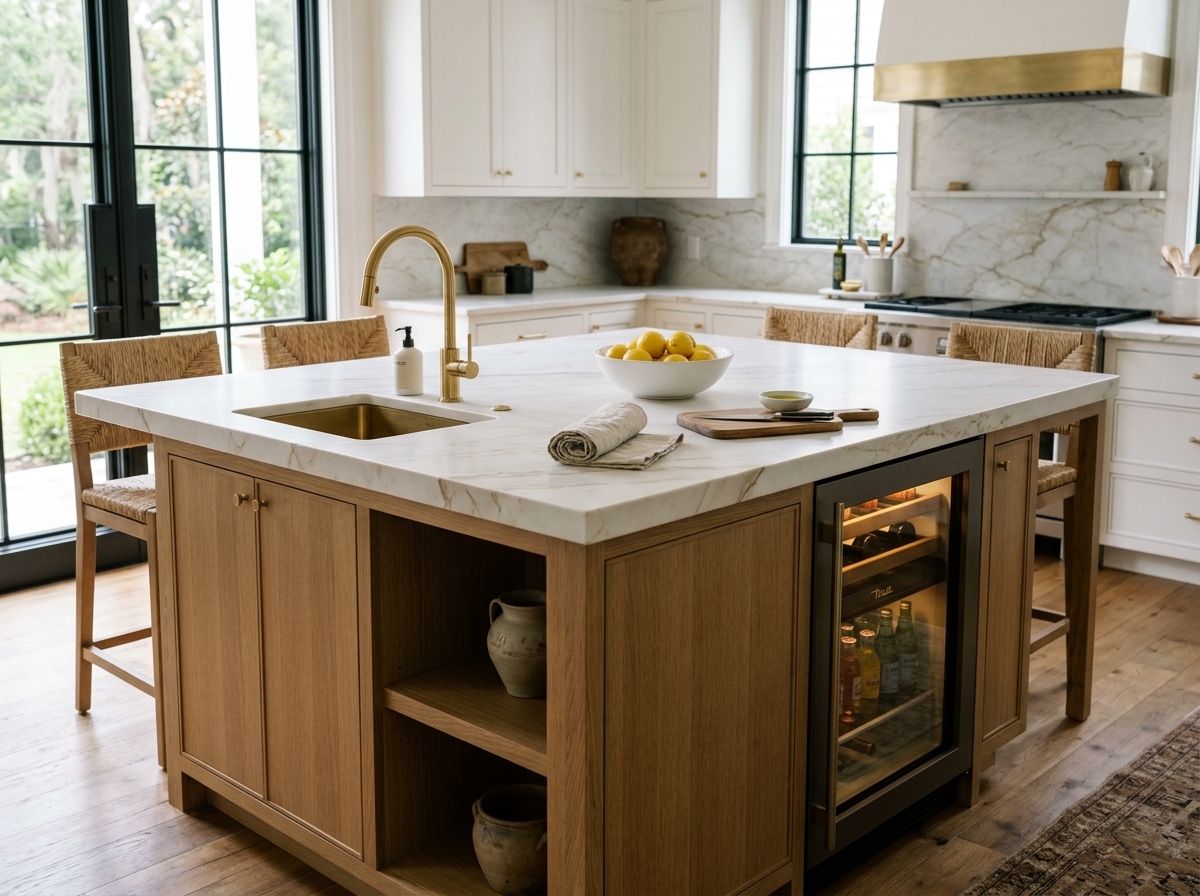
Custom Built-Ins & Oversized Islands
Multi-tiered kitchen islands with beverage centers, prep sinks, and hidden outlets.
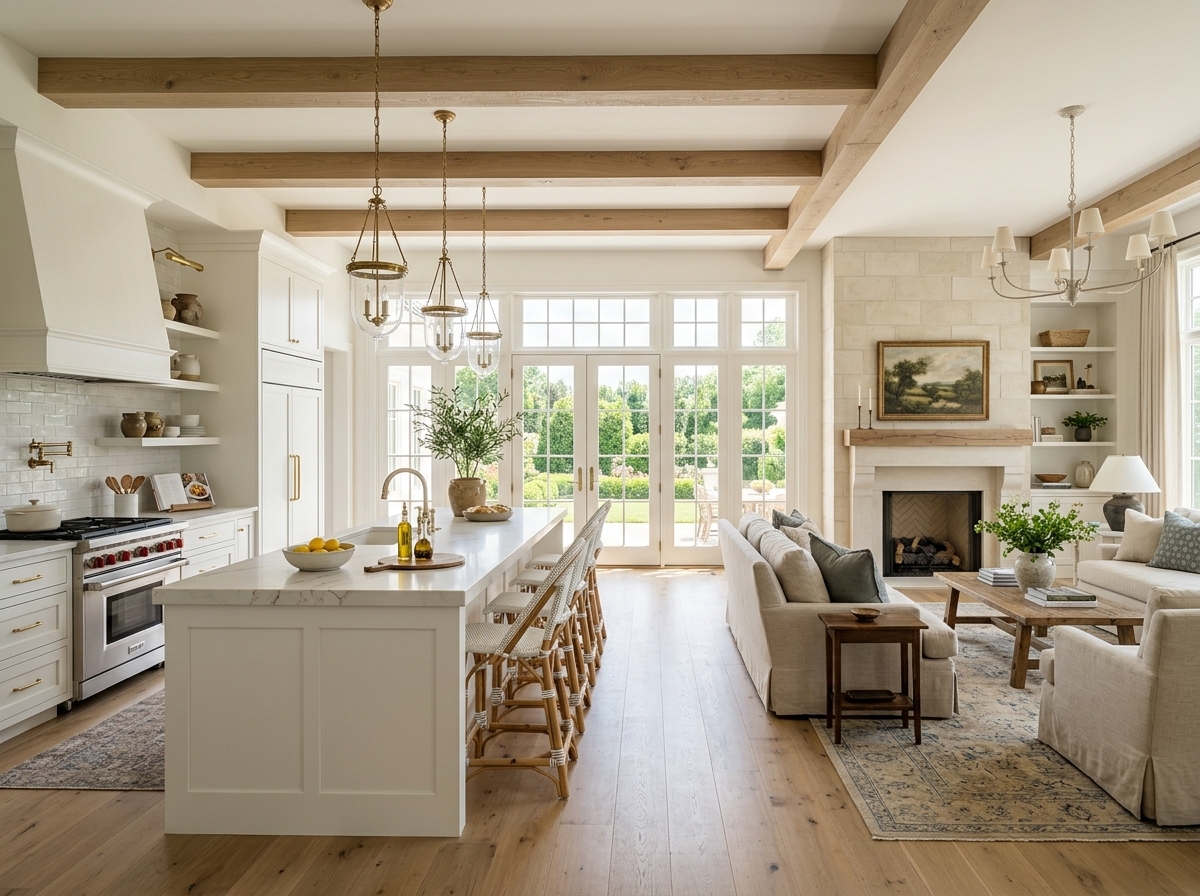
Open-Concept Wall Conversions
Creating bright, flowing entertaining areas by removing restrictive formal walls.
Granite & Quartz Slab Countertops
Custom stone fabrication with seamless sink integration and decorative edge profiles.
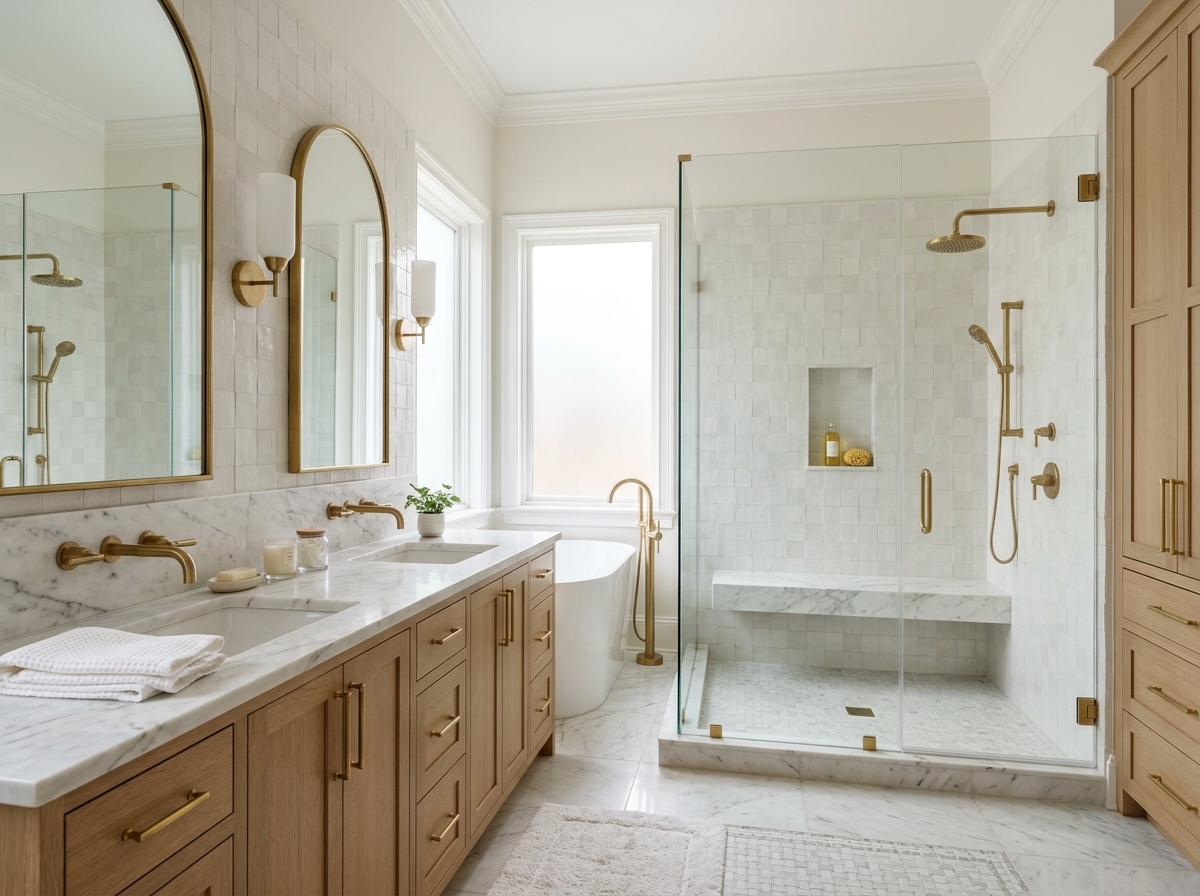
Master Bathroom Transformations
Frameless glass showers, dual vanity conversions, and premium tile flooring.
Recent Memphis Kitchen & Bath Projects
What a Kitchen Remodel Costs in Memphis
Typical Memphis projects — Traditional Southern Brick Colonials & Mid-Century Ranch Layouts — by scope. Transparent ranges, before you call anyone.
Mid-Range
$32,000 – $52,000
Semi-custom cabinetry, quartz counters, new layout tweaks.
Custom High-End
$52,000 – $85,000
Fully custom cabinets, premium appliances, structural changes.
Luxury Full-Gut
$90,000 – $145,000+
Complete gut, redesigned floor plan, bespoke everything.
Neighborhoods We Serve
The Complete Guide to Kitchen Remodeling in Memphis, Germantown, and Collierville
Memphis is not one housing market. It is a river city that grew east in successive waves, and each wave left a different kind of kitchen behind. Inside the older core you find 1900s to 1920s Midtown bungalows and Colonial Revivals, with kitchens that were originally built as small, closed service rooms at the back of the house. Farther east, the post-war boom produced brick ranches and Colonials with kitchens that are bigger but still walled off from the family room. Past that, the 1970s to 1990s subdivisions of Cordova, Germantown, and Collierville brought two-story brick homes with builder-grade cabinetry, soffits over the uppers, and island-less layouts that no longer match how families cook and entertain. A good Memphis remodel starts by reading which of these houses you actually own.
Most of the full remodels we see homeowners plan here are layout projects, not just finish upgrades. The common wish list is the same across zip codes: take out the wall or half-wall between kitchen and keeping room, add a real island with seating and a prep sink, bring in a tall pantry or beverage station, move to quartz or granite slab with an undermount sink, and replace dated lighting with a layered plan. Mid-South hospitality shapes the brief. People host big family meals, football weekends, church and school gatherings, and long summer cookouts, so work-zone separation, ventilation over a serious range, and traffic flow around the island matter more than they might in a smaller market.
The scope also reflects the ground and weather. Memphis sits in a hot, humid subtropical climate with roughly 50-plus inches of rain a year, and it sits on the deep, soft sediments of the Mississippi Embayment near the New Madrid Seismic Zone. Neither of those changes how a kitchen looks on a magazine page, but both influence the details behind the wall: moisture control around sinks and dishwashers, termite-aware framing and flashing practices, ductwork in hot attics, and how an opened wall is tied back into the structure. A remodeler who works in Memphis should talk about these topics before talking about door styles.
That is the argument for a design-build approach on a project in the range our market typically sees for full remodels. When design, estimating, permitting, and construction sit under one roof, the layout is drawn with the structure, the electrical load, and the permit path already in mind, and the budget is built from real scope instead of guesses. Fewer handoffs means fewer change orders. This guide walks through the housing stock, the permit landscape across Memphis, Shelby County, Germantown, and Collierville, local cost drivers, seasonal timing, a realistic timeline, and answers to the questions Memphis homeowners ask most.
What Memphis Houses Are Actually Built Like
The oldest residential fabric sits in Midtown and the neighborhoods near Downtown. Districts such as Annesdale Park, platted in the early 1900s, and Cooper-Young, which grew through roughly the 1880s to 1940 with a peak in the 1920s, are full of bungalows, Craftsman cottages, and Colonial and Tudor Revival houses. Typical construction is wood frame on pier or crawlspace foundations, plaster or lath walls, and original kitchens measured in the low hundreds of square feet. Common problems include undersized and ungrounded wiring from earlier decades, galvanized or cast-iron drain lines, floors that sag from old crawlspace moisture, and lead paint on trim and cabinetry that predates 1978.
East Memphis and the neighborhoods that followed Poplar Avenue eastward are dominated by post-war brick ranches, split-levels, and Colonials built from the 1950s through the 1970s. These homes usually have slab or crawlspace foundations, brick veneer, and a closed kitchen with a pass-through or a single doorway to the dining room. The structure is often straightforward to open up, but you still have to determine whether an interior wall is carrying roof or ceiling loads, and many of these houses have attic ducts and older panels that are close to their limits once you add a modern induction range, a second oven, or a wine and beverage station.
The outer ring, including Cordova, Germantown, and Collierville, is mostly 1970s through 1990s and newer subdivisions: two-story brick and siding homes on larger lots with builder-grade oak or maple cabinets, 36-inch uppers with soffits, laminate or early granite tops, and corner pantries. The bones are generally good and the rooms are generous, but the layouts predate the island-centered kitchen, and homeowners are now rebuilding around entertaining. Across all three areas, the shared Memphis issues are humidity-driven decay around leaks, termite-conscious detailing at wood-to-ground contact, hot-attic duct runs, and the need to check each older house for hidden surprises before drawings are finalized.
Permitting a Kitchen Remodel in Memphis, Shelby County, Germantown, and Collierville
Permitting authority: Memphis and Shelby County Office of Construction Code Enforcement (Develop901); Town of Collierville Building and Codes; City of Germantown planning and codes
Inside the City of Memphis and unincorporated Shelby County, building, electrical, plumbing, and mechanical permits are generally handled through the Memphis and Shelby County Office of Construction Code Enforcement, which accepts applications through the Develop901 portal. Cosmetic work such as painting, flooring, and swapping cabinets in place usually does not require a permit, but moving or removing walls, adding circuits, relocating plumbing, or altering mechanical systems typically does. Trade permits are separate from the building permit, and inspections commonly include rough-in stages before walls are closed and a final. Because adopted code editions and local amendments change, confirm current requirements with Shelby County Code Enforcement before finalizing drawings.
Germantown and Collierville are separate municipalities, and the process differs. In Germantown, the city reviews zoning, site, and design matters such as setbacks, easements, and neighborhood or design-review standards, and published guidance indicates that building permit and inspection work is routed through Shelby County Code Enforcement; confirm that routing with the city. Collierville runs its own Building and Codes Division, which generally requires permits for structural changes, adding or removing walls, and mechanical, electrical, and plumbing work, while describing cabinets, countertops, and finish work as exempt. In both towns, an HOA may also require approval for exterior changes, and Collierville properties inside the local historic district need review before exterior work.
State licensing sits on top of local permits. The Tennessee Board for Licensing Contractors generally requires a contractor license for projects of $25,000 or more, and Shelby County is among the counties where a home improvement license applies to residential projects roughly between $3,000 and $25,000. Splitting a project to stay below a threshold is not permitted. Verify any contractor license on the state lookup before signing. Separately, homes built before 1978 trigger the EPA Renovation, Repair and Painting rule, which requires lead-safe work practices by certified firms. In local historic overlay districts, such as Central Gardens, exterior work visible from the street typically requires a Certificate of Appropriateness from the Memphis Landmarks Commission, while interior-only kitchen work does not. Timelines vary with workload, so ask your remodeler for a current estimate rather than a promise.
What Drives Kitchen Remodel Costs in Memphis
Our market benchmarks for a mid-range remodel are about $32,000 to $52,000, a custom high-end remodel about $52,000 to $85,000, and a luxury full gut about $90,000 to $145,000 or more. Where a project lands in those bands depends on a handful of Memphis-specific factors.
- Wall removal and structural work
- Opening the kitchen to a keeping room or dining room is the most common upgrade here, and it is also the biggest cost swing. A non-bearing partition is simple. A bearing wall needs a properly sized beam, temporary shoring, engineering where required, a permit, and inspection. Brick-veneer and two-story homes add complexity because loads from above must be tracked through the floor system and down to the foundation.
- Older wiring, plumbing, and panel capacity
- Midtown bungalows and mid-century ranches often hide outdated wiring, limited panel capacity, and cast-iron or galvanized pipes. A kitchen with an induction range, dedicated microwave drawer, beverage center, and island receptacles needs more circuits than the original design anticipated. Updating these systems adds cost but also removes risk, and inspectors will look at it.
- Humidity, leak history, and hidden decay
- With roughly 50-plus inches of rainfall a year and long, muggy summers, small leaks around sinks, dishwashers, and old windows can rot subfloors and framing quietly for years. Budget a contingency for repairs found at demolition, and ask your remodeler how they handle moisture detection, flashing, and ventilation so they do not just cover the problem.
- Lead-safe practices in pre-1978 houses
- Anything that disturbs painted surfaces in a pre-1978 home falls under EPA lead-safe renovation rules, which add containment, cleaning, and documentation. That is common in Midtown and in some East Memphis homes. It adds labor and schedule time but is not optional for a paid contractor.
- Historic overlay and design review
- Properties in local historic districts, and in some cases HOA-governed subdivisions in Germantown and Collierville, may require design review before exterior elements change. Interior work is usually less restricted, but windows, rear additions, or relocated vents and exhaust terminations visible from the street can be a trigger. Review time and revised drawings affect both cost and schedule.
- Cabinetry, stone, and appliance selections
- Custom cabinets, slab quartz or granite with an undermount sink and decorative edge, and professional-style ranges and refrigerators are the main discretionary drivers. Lead times for custom millwork and some appliances can run weeks to months, so selections made early protect both budget and schedule.
Seasons & Climate in Memphis
Memphis has a humid subtropical climate. July highs commonly reach the low 90s Fahrenheit with high humidity, and rainfall is spread across the year, with spring often among the wettest periods. For a kitchen remodel, which is mostly an interior project, weather matters in specific ways: open walls and demolition exposed to a muggy day can let moisture into the house, delivery and dumpster logistics can be disrupted by spring storms, and HVAC load rises sharply when a kitchen and adjoining rooms are sealed and torn up in July. A good plan protects the rest of the house with containment and keeps the air conditioning working for the family during the project.
Winter in Memphis is typically mild, but ice storms and freezing rain can cause multi-day power outages and delivery delays. Many homeowners prefer to start planning in late winter or early spring and demolish in spring or early summer so that work finishes before the holidays, which is a popular deadline in a hosting-focused city. Fall is another strong window. Specialty items such as custom cabinets and stone often have lead times that push the start date, so design and ordering in the cooler months can pay off in schedule certainty when construction begins.
Kitchen Remodel Timeline in Memphis
1. Discovery, measurements, and concept design (2 to 4 weeks)
Site visit, measuring, review of the home's age and systems, discussion of layout goals, and a first budget range. In pre-1978 houses, this is when lead-safe planning is raised.
2. Detailed design, selections, and pricing (3 to 6 weeks)
Drawings, elevations, cabinet and stone selections, appliance specs, and a scoped proposal. If a wall is coming out, structural review is scheduled here.
3. Permitting and ordering (2 to 6 weeks, sometimes longer)
Submittals through Develop901, Collierville Building and Codes, or Germantown's process, plus historic review where applicable. Custom cabinets and special-order materials are ordered in parallel. Review times vary, so confirm current timing with the jurisdiction.
4. Demolition and rough-in (2 to 4 weeks)
Controlled demolition, any beam or framing work, subfloor repairs, and new electrical, plumbing, and mechanical rough-in. Framing and rough-in inspections are typically scheduled before walls are closed.
5. Cabinets, stone, and finishes (4 to 8 weeks)
Drywall, paint, flooring, cabinet install, countertop templating and fabrication, backsplash, plumbing and electrical trim, lighting, and appliance install.
6. Final inspections and punch list (1 to 2 weeks)
Final inspections, adjustments, and a walkthrough. Full remodels commonly run several months from construction start to completion, depending on scope and lead times.
Memphis Kitchen Remodeling FAQ
Do I need a permit to remodel my kitchen in Memphis?
Usually yes if the work moves or removes walls or changes electrical, plumbing, or mechanical systems. Swapping cabinets in the same layout, painting, and replacing flooring typically does not. In the City of Memphis and unincorporated Shelby County, permits generally go through the Memphis and Shelby County Office of Construction Code Enforcement and its Develop901 portal. Confirm current requirements for your address before work begins.
Is the permit process different in Germantown and Collierville?
Yes. They are separate municipalities. Collierville has its own Building and Codes Division that handles permits for structural, electrical, plumbing, and mechanical work. Germantown reviews zoning, setbacks, and design matters, and published guidance indicates building permits and inspections are routed through Shelby County Code Enforcement. Always confirm routing and any HOA approval with the town and your neighborhood association.
What contractor license is required in Tennessee?
Tennessee generally requires a state contractor license for projects of $25,000 or more. Shelby County is among the counties where a home improvement license applies to residential work roughly between $3,000 and $25,000. You can verify any license through the Tennessee Board for Licensing Contractors lookup. Ask your remodeler for license details and certificate of insurance before signing, and confirm the thresholds, since rules can change.
How does a pre-1978 house change a remodel?
Houses built before 1978 may contain lead-based paint, and paid contractors who disturb paint must follow the EPA Renovation, Repair and Painting rule. That means a certified firm, lead-safe containment, cleaning verification, and delivery of the Renovate Right pamphlet. It adds some time and cost, which is common in Midtown bungalows and many East Memphis homes. Ask any contractor for proof of EPA lead-safe certification.
Should I worry about earthquakes when removing a wall?
Memphis sits near the New Madrid Seismic Zone and on deep soft soils, so structural work is taken seriously. That does not mean you cannot open a kitchen. It means a bearing wall removal should be done with a properly sized beam, correct posts and load path to the foundation, and permit review, with engineering where required. Ask your remodeler how the new beam is tied into the existing structure.
What about termites and moisture?
Memphis is in a moderate to heavy termite pressure area, and native eastern subterranean termites cause most damage. Formosan termites have been documented in Shelby County but are not widely established. Combined with a humid climate, that makes moisture control and termite-aware detailing important when you open walls and floors. Report any mud tubes or soft wood you find to a licensed pest professional before closing things up.
How much of a kitchen remodel will I get back at resale?
Cost vs. Value reports for the East South Central region have generally shown that smaller, midrange kitchen updates recoup a high share of their cost, while major and upscale remodels recoup much less at resale. Most Memphis homeowners doing a full remodel are investing for daily use and long-term ownership as much as for resale. Treat any resale figure as a regional average, not a promise for your house.
Can MLGW or TVA programs help with a remodel?
Possibly in part. TVA's Home Uplift program, offered with local power companies including MLGW, provides income-eligible households with energy upgrades such as insulation, air sealing, and HVAC work. It is not a kitchen remodeling grant, and eligibility rules apply. If your project includes attic insulation, duct sealing, or appliance changes, check current programs with MLGW and TVA EnergyRight before you start.
Sources & Further Reading
Local requirements change. Always confirm current rules with the permitting agency before starting work.
- Develop901 - Memphis and Shelby County permitting portal
- Shelby County Government - Office of Construction Code Enforcement
- Tennessee Board for Licensing Contractors (Department of Commerce and Insurance)
- Town of Collierville - Building and Codes and Historic District
- City of Germantown, Tennessee - Code Compliance and Planning
- U.S. EPA - Lead Renovation, Repair and Painting Program
- Memphis Light, Gas and Water (MLGW) - Home Uplift and Share the Pennies
- TVA EnergyRight - Home Uplift program
- Memphis Heritage - historic districts and architecture
- USGS - New Madrid Seismic Zone
- Cost vs. Value Report - regional remodeling cost and resale data
- National Weather Service Memphis - climate information